
Copyright © 2024 Yutong (Zhejiang) Medical Technology Co. , Ltd.
Frame Materials Explained: Aluminum, Steel, and Carbon Fiber in Mobility Devices
When choosing a wheelchair or mobility scooter, the frame material is one of the most important decisions you'll make. It affects everything—how heavy the device feels, how smooth the ride is, how long it lasts, and even how easy it is to transport.
But with options like aluminum, steel, and carbon fiber, how do you know which is right for you? This guide breaks down each material's strengths, weaknesses, and ideal use cases, helping you make an informed choice for your lifestyle.
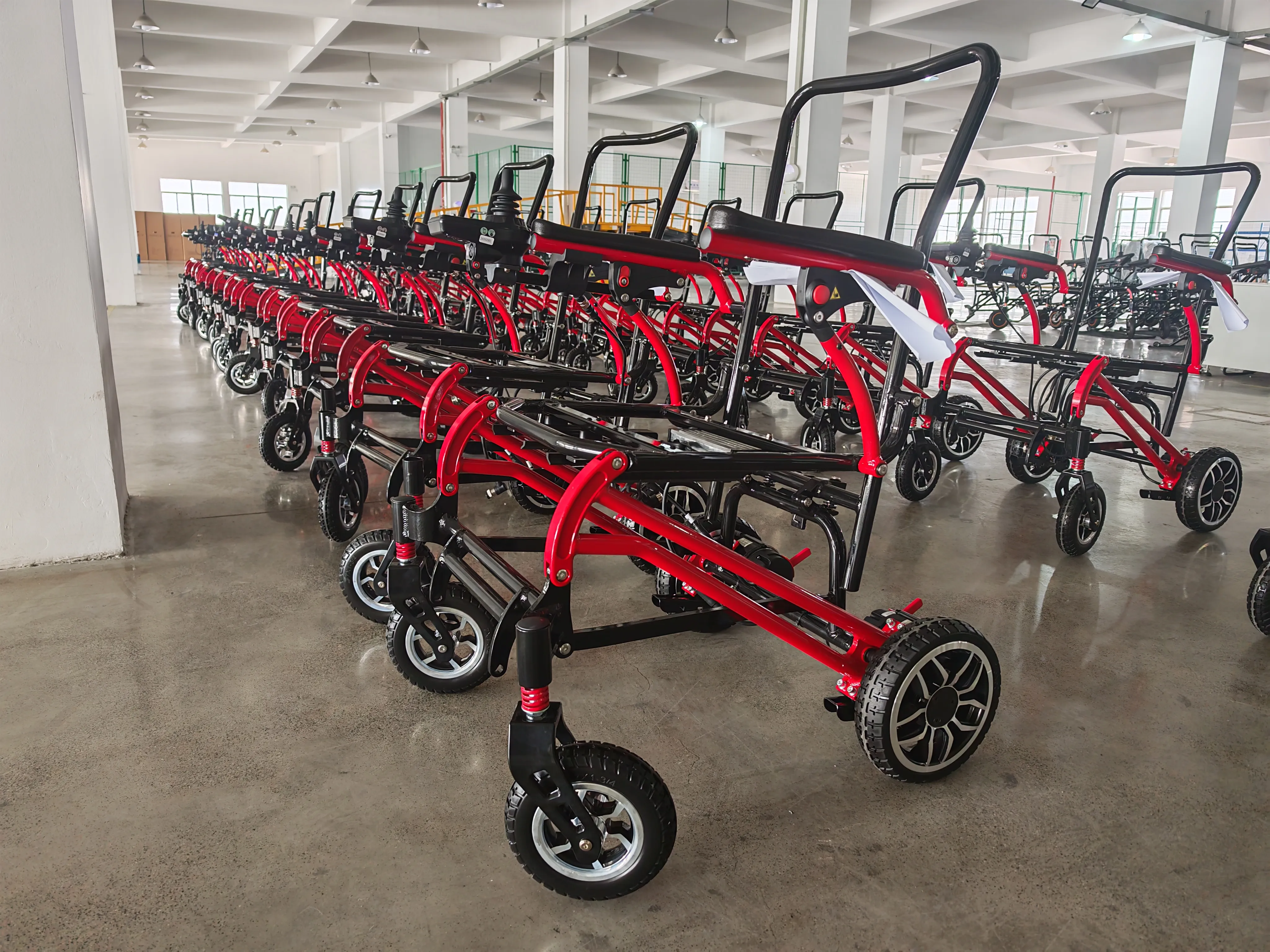
Why Frame Material Matters
The frame is the backbone of any mobility device. It supports your weight, holds all the components together, and determines how the device handles. Getting the material right means:
-
Less fatigue when propelling or lifting
-
Better durability over years of use
-
Smoother rides with less vibration
-
Easier transport in cars and airplanes
As experts note, frame material directly impacts "the chair's overall weight, durability, and the smoothness of the ride" -5.
Material 1: Aluminum – The Balanced All-Rounder
What Is It?
Aluminum alloys, particularly 6061-T6 and 7005 series, are the most common materials used in modern mobility devices -1-4. These are lightweight metals that offer an excellent balance of performance and affordability.
Key Characteristics
| Feature | Rating | Explanation |
|---|---|---|
| Weight | Light | 30-40% lighter than steel -1 |
| Strength | Moderate | Good strength-to-weight ratio -3 |
| Cost | Affordable | Most budget-friendly option -3 |
| Corrosion Resistance | Excellent | Natural oxide layer prevents rust -5 |
| Vibration Damping | Moderate | Transmits some road vibration |
| Fatigue Life | Limited | Shows metal fatigue with heavy use over time -5 |
Advantages
Lightweight and Practical
Aluminum frames typically weigh 30-40% less than steel frames of equivalent strength -1. For a manual wheelchair user who self-propels, this weight reduction means less energy expended and less strain on shoulders.
Cost-Effective
Aluminum is the most economical choice among high-quality frame materials -3. This makes it the go-to option for many funding sources and budget-conscious buyers.
Corrosion-Resistant
Aluminum naturally forms a protective oxide layer, making it highly resistant to rust -5. This is especially valuable if you live in humid climates or near the coast.
Highly Customizable
Aluminum is easy to shape and weld, allowing manufacturers to create custom configurations tailored to individual needs -5.
Limitations
Fatigue Over Time
Unlike some materials, aluminum does experience metal fatigue with repeated stress. For heavy daily users, experts recommend inspecting aluminum frames every 2-3 years to ensure structural integrity -5.
Vibration Transfer
Aluminum transmits road vibrations more readily than some alternatives, which can lead to discomfort on longer trips or rougher terrain -3.
Best For
-
First-time wheelchair users
-
Budget-conscious buyers
-
Those who use their chair moderately (not all day, every day)
-
Users who need a good balance of weight and cost
Material 2: Steel – The Heavy-Duty Workhorse
What Is It?
Steel, particularly chromoly (chromium-molybdenum alloy), is known for exceptional strength and durability. While less common in ultra-lightweight devices, it remains popular for heavy-duty and bariatric applications.
Key Characteristics
| Feature | Rating | Explanation |
|---|---|---|
| Weight | Heavy | Significantly heavier than aluminum -1 |
| Strength | Very High | Excellent load-bearing capacity |
| Cost | Moderate | Generally affordable |
| Corrosion Resistance | Poor | Requires protective coating to prevent rust -1 |
| Vibration Damping | Excellent | Naturally absorbs shocks and vibrations -1 |
| Fatigue Life | Very Good | Withstands repeated stress well |
Advantages
Superior Strength
Steel frames can handle higher weight capacities and rougher use than most alternatives. This makes them ideal for bariatric users or those who need maximum durability.
Excellent Vibration Absorption
Steel's natural properties dampen road vibrations, providing a smoother, more comfortable ride -1. This is especially noticeable on uneven surfaces.
Durable and Repairable
Steel frames can often be repaired by welding if damaged—a significant advantage over materials that require replacement -1.
Limitations
Weight Penalty
Steel is substantially heavier than aluminum or carbon fiber. A steel frame can weigh twice as much as an aluminum frame of similar strength -1. This makes transport and self-propulsion more challenging.
Rust Susceptibility
Without proper coating, steel will rust when exposed to moisture -1. This requires diligent maintenance, especially in humid environments.
Best For
-
Bariatric users needing higher weight capacity
-
Users who prioritize durability over portability
-
Those who don't need to lift the device frequently
-
Rough terrain or heavy-duty use
Material 3: Carbon Fiber – The Premium Performance Material
What Is It?
Carbon fiber reinforced polymer (CFRP) is a composite material made of carbon fibers embedded in a resin matrix. Originally developed for aerospace and Formula 1 racing, it now represents the cutting edge of mobility device design -8-10.
Key Characteristics
| Feature | Rating | Explanation |
|---|---|---|
| Weight | Ultra-Light | 25% lighter than aluminum, <20% of steel weight -6 |
| Strength | Extremely High | Highest strength-to-weight ratio available -3 |
| Cost | Premium | Often 2x or more than aluminum -1 |
| Corrosion Resistance | Excellent | Completely immune to rust -6-7 |
| Vibration Damping | Superior | Naturally absorbs micro-vibrations -3-7 |
| Fatigue Life | Near-Infinite | Outlasts metal frames in fatigue testing -3-10 |
Advantages
Ultimate Lightweight Performance
Carbon fiber offers the highest strength-to-weight ratio of any common frame material -3-6. A carbon fiber wheelchair can weigh as little as 4.2 kg (9.3 lbs) -2—making it dramatically easier to lift, transport, and self-propel.
Exceptional Durability
Research shows carbon fiber frames survive more testing cycles than any other material -10. Carbon fiber has a "near-infinite fatigue life," meaning it won't weaken over years of regular use like metal frames do -3.
Superior Ride Quality
Carbon fiber naturally dampens vibrations, providing a smoother, more comfortable ride than metal frames -3-7. This reduces fatigue during long days out and protects your body from constant jolts.
Design Flexibility
Unlike metal tubes that must be bent into shape, carbon fiber can be molded into complex, ergonomic forms -2-6. This allows for designs that fit the body better and look more modern.
Corrosion-Proof
Carbon fiber is completely immune to rust and corrosion -6-7. It won't degrade in humid environments, near salt water, or from sweat exposure.
Limitations
Higher Upfront Cost
Carbon fiber frames are the most expensive option, often costing twice as much as comparable aluminum models -1-10. However, this higher initial investment can pay off in longevity.
Impact Sensitivity
While incredibly strong under normal use, carbon fiber can crack or shatter under a severe impact that might only dent a metal frame -5. Users who frequently drop or mishandle their chairs should consider this.
Complex Repairs
Unlike steel or aluminum, carbon fiber cannot be welded -1. Damage typically requires specialized repair or full replacement.
Best For
-
Frequent travelers who lift their chair often
-
Active users who self-propel long distances
-
Those seeking the lightest possible device
-
Users who value modern aesthetics
-
Anyone planning to keep their chair for many years
Material Comparison at a Glance
| Factor | Steel | Aluminum | Carbon Fiber |
|---|---|---|---|
| Weight | Heavy | Light | Ultra-Light |
| Strength-to-Weight Ratio | Moderate | Good | Highest -3 |
| Durability | Excellent | Good | Excellent (fatigue-resistant) -10 |
| Vibration Damping | Excellent | Moderate | Superior -3 |
| Corrosion Resistance | Poor | Good | Excellent -6 |
| Repairability | Good (weldable) | Moderate | Poor (specialized only) |
| Cost | Low-Moderate | Moderate | High |
| Typical Weight (Manual Chair) | 30-40+ lbs | 25-35 lbs | 15-25 lbs -2 |
How to Choose the Right Material for Your Needs
Ask Yourself These Questions
1. How often will you lift and transport the device?
-
Daily lifting → Prioritize lightweight: Carbon fiber or aluminum
-
Rarely transport → Steel may be acceptable
2. What's your budget?
-
Limited budget → Aluminum offers the best value
-
Willing to invest for long-term benefits → Carbon fiber
3. How much do you use the device?
-
Occasional use → Aluminum is perfectly adequate
-
All-day, every day → Carbon fiber's fatigue resistance is valuable -10
4. Where do you live and travel?
-
Humid or coastal areas → Avoid steel, choose aluminum or carbon fiber
-
Rough terrain → Consider steel's strength or carbon fiber's vibration damping
5. Who will handle the device?
-
Self-handling → Ultra-lightweight carbon fiber reduces physical strain -10
-
Caregiver assistance → Aluminum may be sufficient
The Science Behind the Materials
Strength-to-Weight Ratio Explained
This is the key metric for mobility device frames. It measures how much strength a material provides relative to its weight -3.
-
Aluminum: Moderate strength-to-weight ratio—good, but not exceptional
-
Steel: Lower strength-to-weight ratio—strong, but heavy
-
Carbon Fiber: Highest strength-to-weight ratio available -3
What does this mean practically? A carbon fiber frame can be significantly lighter than aluminum while being just as strong—or even stronger.
Fatigue Life: Why It Matters
Every time you use your wheelchair, the frame undergoes tiny stresses. Over thousands of cycles, metal frames can develop fatigue cracks. Research shows carbon fiber frames "survived more testing cycles than any other wheelchair" -10, meaning they maintain their structural integrity far longer than metal alternatives.
Vibration Damping: The Comfort Factor
Carbon fiber's unique molecular structure naturally absorbs micro-vibrations from rough surfaces -3-7. This means less fatigue for your body and a more comfortable ride, especially on longer outings.
What the Research Says
A peer-reviewed study comparing carbon fiber and aluminum wheelchairs found:
-
Carbon fiber frames survived more ANSI/RESNA testing cycles than aluminum models
-
While upfront cost is higher, durability benefits may justify the investment for active users
-
Lower weight improves users' ability to transfer in and out of vehicles -10
The study concluded that carbon fiber construction is "a viable alternative to aluminum, titanium, or steel construction" -10.
How Our Yutong-Everycare Devices Use These Materials
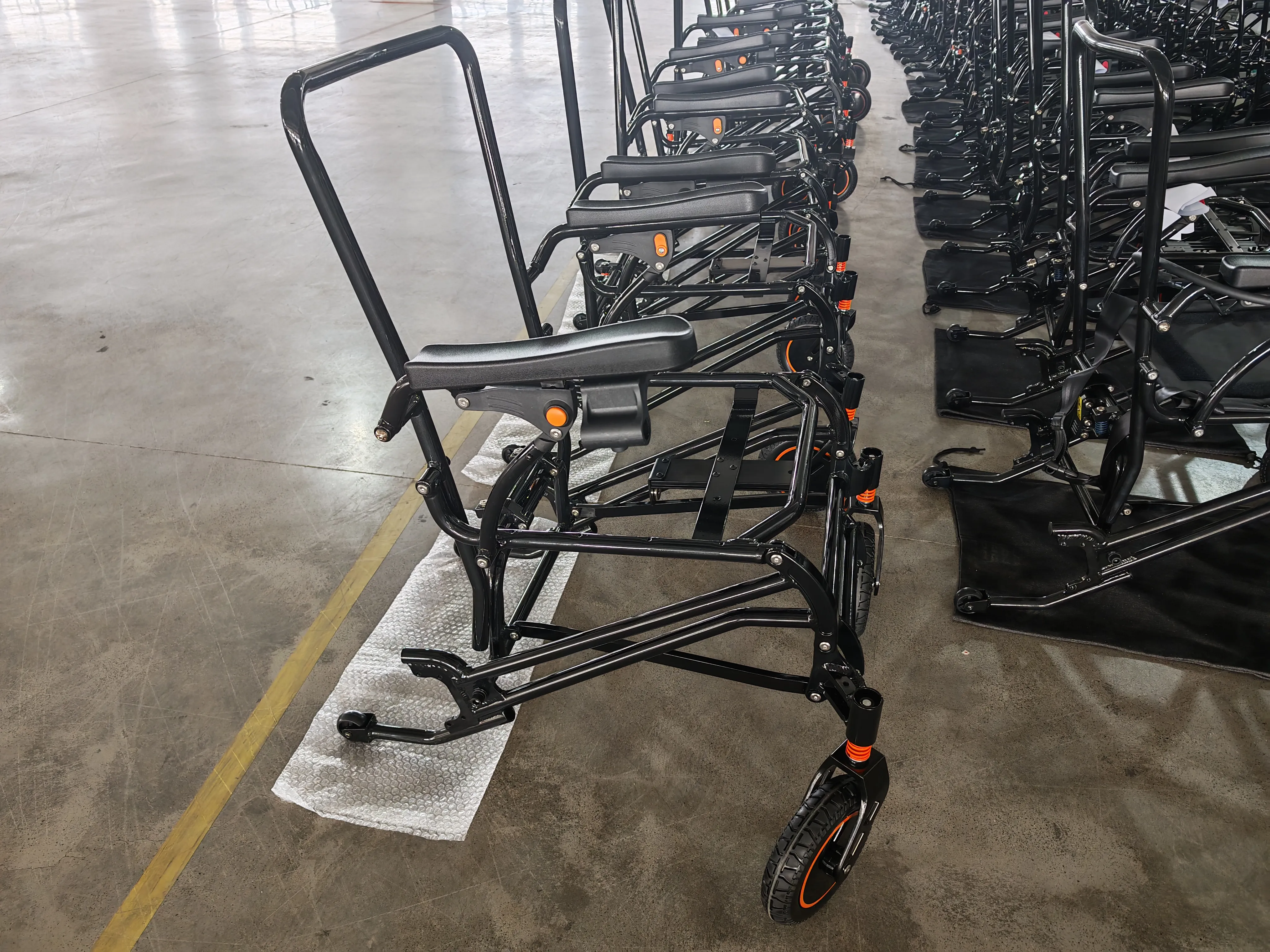
The Yutong-Everycare uses the aerospcace-grade aluminum alloy, with good strength-to-weight ratio and competitve prices, to give you an ideal and reliable companion in travels, outdoors, and indoors.
Frequently Asked Questions
Q: Which material is best for air travel?
A: All three can work, but lightweight materials (carbon fiber or aluminum) are easier to handle at airports. The battery compliance matters more than the frame material for flying.
Q: How long should a wheelchair frame last?
A: With proper care, aluminum frames last 5-10 years; carbon fiber frames can last 10+ years due to superior fatigue resistance -10. Steel frames can last indefinitely if protected from rust.
Q: Can I upgrade my aluminum chair to carbon fiber later?
A: The frame is the core component; upgrading means purchasing a new chair. Choose the material that fits your long-term needs from the start.
Q: Is carbon fiber worth the extra cost?
A: For active users, frequent travelers, and those who self-propel daily, the combination of lighter weight, smoother ride, and exceptional durability often justifies the investment -10.
Q: How do I maintain each material?
A: Aluminum and carbon fiber require minimal maintenance—just keep clean. Steel needs protection from moisture to prevent rust.
Conclusion: Choose What Fits Your Life
The "best" frame material isn't the same for everyone. It depends on your mobility needs, lifestyle, budget, and how you plan to use your device.
-
Choose Steel if: You need maximum weight capacity, prioritize durability over portability, and don't transport the device frequently.
-
Choose Aluminum if: You want a great balance of weight, durability, and affordability—perfect for most users.
-
Choose Carbon Fiber if: You value the lightest possible weight, travel often, self-propel long distances, or plan to use your chair for many years.
Ready to find your perfect match? Explore our collection of Yutong-Everycare mobility devices, engineered with the right materials for your lifestyle.
本回答由 AI 生成,内容仅供参考,请仔细甄别。
When choosing a wheelchair or mobility scooter, the frame material is one of the most important decisions you'll make. It affects everything—how heavy the device feels, how smooth the ride is, how long it lasts, and even how easy it is to transport.
But with options like aluminum, steel, and carbon fiber, how do you know which is right for you? This guide breaks down each material's strengths, weaknesses, and ideal use cases, helping you make an informed choice for your lifestyle.
Why Frame Material Matters
The frame is the backbone of any mobility device. It supports your weight, holds all the components together, and determines how the device handles. Getting the material right means:
-
Less fatigue when propelling or lifting
-
Better durability over years of use
-
Smoother rides with less vibration
-
Easier transport in cars and airplanes
As experts note, frame material directly impacts "the chair's overall weight, durability, and the smoothness of the ride" -5.
Material 1: Aluminum – The Balanced All-Rounder
What Is It?
Aluminum alloys, particularly 6061-T6 and 7005 series, are the most common materials used in modern mobility devices -1-4. These are lightweight metals that offer an excellent balance of performance and affordability.
Key Characteristics
| Feature | Rating | Explanation |
|---|---|---|
| Weight | Light | 30-40% lighter than steel -1 |
| Strength | Moderate | Good strength-to-weight ratio -3 |
| Cost | Affordable | Most budget-friendly option -3 |
| Corrosion Resistance | Excellent | Natural oxide layer prevents rust -5 |
| Vibration Damping | Moderate | Transmits some road vibration |
| Fatigue Life | Limited | Shows metal fatigue with heavy use over time -5 |
Advantages
Lightweight and Practical
Aluminum frames typically weigh 30-40% less than steel frames of equivalent strength -1. For a manual wheelchair user who self-propels, this weight reduction means less energy expended and less strain on shoulders.
Cost-Effective
Aluminum is the most economical choice among high-quality frame materials -3. This makes it the go-to option for many funding sources and budget-conscious buyers.
Corrosion-Resistant
Aluminum naturally forms a protective oxide layer, making it highly resistant to rust -5. This is especially valuable if you live in humid climates or near the coast.
Highly Customizable
Aluminum is easy to shape and weld, allowing manufacturers to create custom configurations tailored to individual needs -5.
Limitations
Fatigue Over Time
Unlike some materials, aluminum does experience metal fatigue with repeated stress. For heavy daily users, experts recommend inspecting aluminum frames every 2-3 years to ensure structural integrity -5.
Vibration Transfer
Aluminum transmits road vibrations more readily than some alternatives, which can lead to discomfort on longer trips or rougher terrain -3.
Best For
-
First-time wheelchair users
-
Budget-conscious buyers
-
Those who use their chair moderately (not all day, every day)
-
Users who need a good balance of weight and cost
Material 2: Steel – The Heavy-Duty Workhorse
What Is It?
Steel, particularly chromoly (chromium-molybdenum alloy), is known for exceptional strength and durability. While less common in ultra-lightweight devices, it remains popular for heavy-duty and bariatric applications.
Key Characteristics
| Feature | Rating | Explanation |
|---|---|---|
| Weight | Heavy | Significantly heavier than aluminum -1 |
| Strength | Very High | Excellent load-bearing capacity |
| Cost | Moderate | Generally affordable |
| Corrosion Resistance | Poor | Requires protective coating to prevent rust -1 |
| Vibration Damping | Excellent | Naturally absorbs shocks and vibrations -1 |
| Fatigue Life | Very Good | Withstands repeated stress well |
Advantages
Superior Strength
Steel frames can handle higher weight capacities and rougher use than most alternatives. This makes them ideal for bariatric users or those who need maximum durability.
Excellent Vibration Absorption
Steel's natural properties dampen road vibrations, providing a smoother, more comfortable ride -1. This is especially noticeable on uneven surfaces.
Durable and Repairable
Steel frames can often be repaired by welding if damaged—a significant advantage over materials that require replacement -1.
Limitations
Weight Penalty
Steel is substantially heavier than aluminum or carbon fiber. A steel frame can weigh twice as much as an aluminum frame of similar strength -1. This makes transport and self-propulsion more challenging.
Rust Susceptibility
Without proper coating, steel will rust when exposed to moisture -1. This requires diligent maintenance, especially in humid environments.
Best For
-
Bariatric users needing higher weight capacity
-
Users who prioritize durability over portability
-
Those who don't need to lift the device frequently
-
Rough terrain or heavy-duty use
Material 3: Carbon Fiber – The Premium Performance Material
What Is It?
Carbon fiber reinforced polymer (CFRP) is a composite material made of carbon fibers embedded in a resin matrix. Originally developed for aerospace and Formula 1 racing, it now represents the cutting edge of mobility device design -8-10.
Key Characteristics
| Feature | Rating | Explanation |
|---|---|---|
| Weight | Ultra-Light | 25% lighter than aluminum, <20% of steel weight -6 |
| Strength | Extremely High | Highest strength-to-weight ratio available -3 |
| Cost | Premium | Often 2x or more than aluminum -1 |
| Corrosion Resistance | Excellent | Completely immune to rust -6-7 |
| Vibration Damping | Superior | Naturally absorbs micro-vibrations -3-7 |
| Fatigue Life | Near-Infinite | Outlasts metal frames in fatigue testing -3-10 |
Advantages
Ultimate Lightweight Performance
Carbon fiber offers the highest strength-to-weight ratio of any common frame material -3-6. A carbon fiber wheelchair can weigh as little as 4.2 kg (9.3 lbs) -2—making it dramatically easier to lift, transport, and self-propel.
Exceptional Durability
Research shows carbon fiber frames survive more testing cycles than any other material -10. Carbon fiber has a "near-infinite fatigue life," meaning it won't weaken over years of regular use like metal frames do -3.
Superior Ride Quality
Carbon fiber naturally dampens vibrations, providing a smoother, more comfortable ride than metal frames -3-7. This reduces fatigue during long days out and protects your body from constant jolts.
Design Flexibility
Unlike metal tubes that must be bent into shape, carbon fiber can be molded into complex, ergonomic forms -2-6. This allows for designs that fit the body better and look more modern.
Corrosion-Proof
Carbon fiber is completely immune to rust and corrosion -6-7. It won't degrade in humid environments, near salt water, or from sweat exposure.
Limitations
Higher Upfront Cost
Carbon fiber frames are the most expensive option, often costing twice as much as comparable aluminum models -1-10. However, this higher initial investment can pay off in longevity.
Impact Sensitivity
While incredibly strong under normal use, carbon fiber can crack or shatter under a severe impact that might only dent a metal frame -5. Users who frequently drop or mishandle their chairs should consider this.
Complex Repairs
Unlike steel or aluminum, carbon fiber cannot be welded -1. Damage typically requires specialized repair or full replacement.
Best For
-
Frequent travelers who lift their chair often
-
Active users who self-propel long distances
-
Those seeking the lightest possible device
-
Users who value modern aesthetics
-
Anyone planning to keep their chair for many years
Material Comparison at a Glance
| Factor | Steel | Aluminum | Carbon Fiber |
|---|---|---|---|
| Weight | Heavy | Light | Ultra-Light |
| Strength-to-Weight Ratio | Moderate | Good | Highest -3 |
| Durability | Excellent | Good | Excellent (fatigue-resistant) -10 |
| Vibration Damping | Excellent | Moderate | Superior -3 |
| Corrosion Resistance | Poor | Good | Excellent -6 |
| Repairability | Good (weldable) | Moderate | Poor (specialized only) |
| Cost | Low-Moderate | Moderate | High |
| Typical Weight (Manual Chair) | 30-40+ lbs | 25-35 lbs | 15-25 lbs -2 |
How to Choose the Right Material for Your Needs
Ask Yourself These Questions
1. How often will you lift and transport the device?
-
Daily lifting → Prioritize lightweight: Carbon fiber or aluminum
-
Rarely transport → Steel may be acceptable
2. What's your budget?
-
Limited budget → Aluminum offers the best value
-
Willing to invest for long-term benefits → Carbon fiber
3. How much do you use the device?
-
Occasional use → Aluminum is perfectly adequate
-
All-day, every day → Carbon fiber's fatigue resistance is valuable -10
4. Where do you live and travel?
-
Humid or coastal areas → Avoid steel, choose aluminum or carbon fiber
-
Rough terrain → Consider steel's strength or carbon fiber's vibration damping
5. Who will handle the device?
-
Self-handling → Ultra-lightweight carbon fiber reduces physical strain -10
-
Caregiver assistance → Aluminum may be sufficient
The Science Behind the Materials
Strength-to-Weight Ratio Explained
This is the key metric for mobility device frames. It measures how much strength a material provides relative to its weight -3.
-
Aluminum: Moderate strength-to-weight ratio—good, but not exceptional
-
Steel: Lower strength-to-weight ratio—strong, but heavy
-
Carbon Fiber: Highest strength-to-weight ratio available -3
What does this mean practically? A carbon fiber frame can be significantly lighter than aluminum while being just as strong—or even stronger.
Fatigue Life: Why It Matters
Every time you use your wheelchair, the frame undergoes tiny stresses. Over thousands of cycles, metal frames can develop fatigue cracks. Research shows carbon fiber frames "survived more testing cycles than any other wheelchair" -10, meaning they maintain their structural integrity far longer than metal alternatives.
Vibration Damping: The Comfort Factor
Carbon fiber's unique molecular structure naturally absorbs micro-vibrations from rough surfaces -3-7. This means less fatigue for your body and a more comfortable ride, especially on longer outings.
What the Research Says
A peer-reviewed study comparing carbon fiber and aluminum wheelchairs found:
-
Carbon fiber frames survived more ANSI/RESNA testing cycles than aluminum models
-
While upfront cost is higher, durability benefits may justify the investment for active users
-
Lower weight improves users' ability to transfer in and out of vehicles -10
The study concluded that carbon fiber construction is "a viable alternative to aluminum, titanium, or steel construction" -10.
How Our Yutong-Everycare Devices Use These Materials
The Yutong-Everycare uses the aerospcace-grade aluminum alloy, with good strength-to-weight ratio and competitve prices, to give you an ideal and reliable companion in travels, outdoors, and indoors.
Frequently Asked Questions
Q: Which material is best for air travel?
A: All three can work, but lightweight materials (carbon fiber or aluminum) are easier to handle at airports. The battery compliance matters more than the frame material for flying.
Q: How long should a wheelchair frame last?
A: With proper care, aluminum frames last 5-10 years; carbon fiber frames can last 10+ years due to superior fatigue resistance -10. Steel frames can last indefinitely if protected from rust.
Q: Can I upgrade my aluminum chair to carbon fiber later?
A: The frame is the core component; upgrading means purchasing a new chair. Choose the material that fits your long-term needs from the start.
Q: Is carbon fiber worth the extra cost?
A: For active users, frequent travelers, and those who self-propel daily, the combination of lighter weight, smoother ride, and exceptional durability often justifies the investment -10.
Q: How do I maintain each material?
A: Aluminum and carbon fiber require minimal maintenance—just keep clean. Steel needs protection from moisture to prevent rust.
Conclusion: Choose What Fits Your Life
The "best" frame material isn't the same for everyone. It depends on your mobility needs, lifestyle, budget, and how you plan to use your device.
-
Choose Steel if: You need maximum weight capacity, prioritize durability over portability, and don't transport the device frequently.
-
Choose Aluminum if: You want a great balance of weight, durability, and affordability—perfect for most users.
-
Choose Carbon Fiber if: You value the lightest possible weight, travel often, self-propel long distances, or plan to use your chair for many years.
Ready to find your perfect match? Explore our collection of Yutong-Everycare mobility devices, engineered with the right materials for your lifestyle.
本回答由 AI 生成,内容仅供参考,请仔细甄别。
Make every space a safer place!