The Engineering Behind One-Touch Folding Systems: How Modern Wheelchairs Fold Themselves


Imagine arriving at an airport check-in desk after a long journey. You have a connection to catch and luggage to manage. With a traditional wheelchair, you'd need to disassemble components, wrestle with cross-braces, possibly remove wheels, and pray everything fits back together at your destination. With a modern one-touch folding wheelchair, you press a button or release a latch, and within seconds—usually less than three seconds—your full-sized mobility device transforms into a compact, luggage-like package ready for transport.

This isn't magic. It's the result of decades of engineering refinement, material science breakthroughs, and a fundamental rethinking of what a wheelchair should be.

This article explores the engineering principles that make one-touch folding possible, the critical components that ensure reliability, and what you should look for when evaluating a folding mobility device.
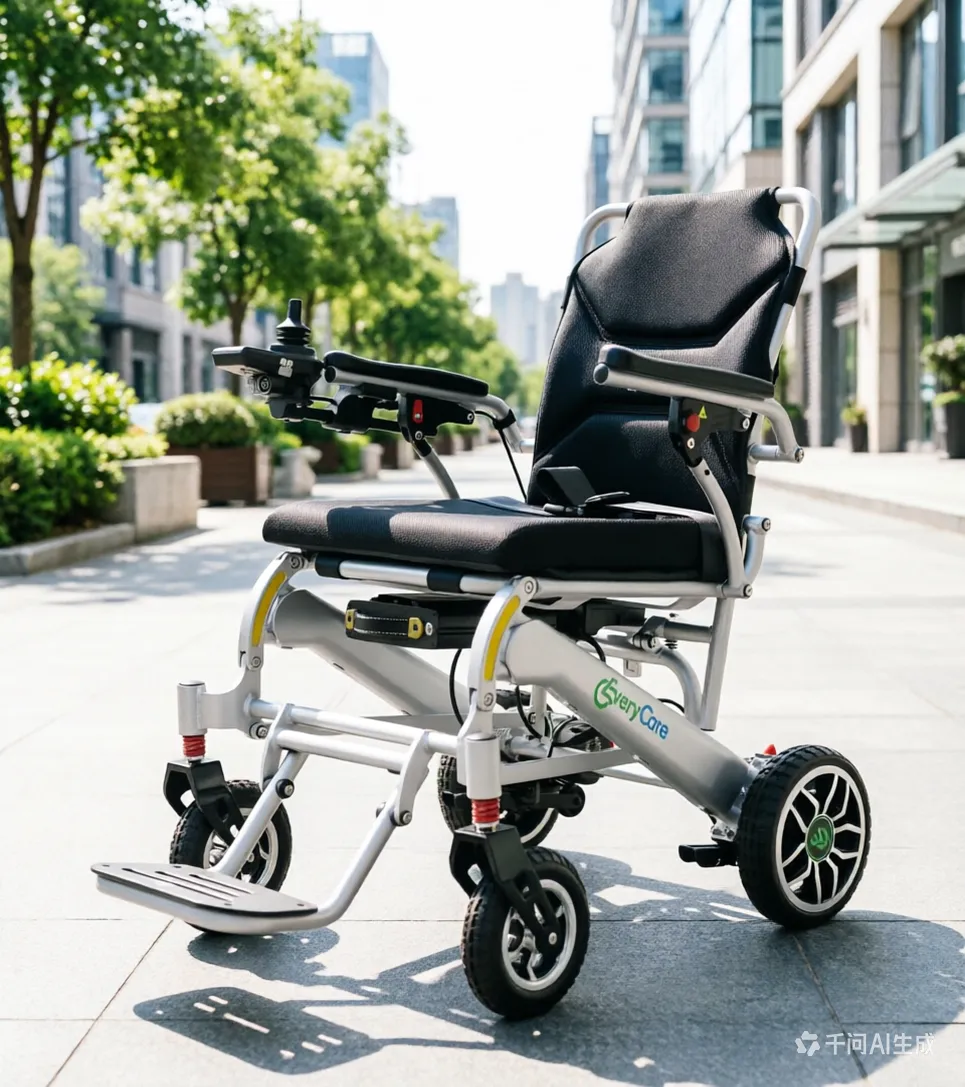
Electric folding wheelchair, foldable automatic wheelchair, auto folding electric wheelchairs, auto folding power wheelchair, auto folding power electric wheelchair, auto folding powered wheelchair, auto folding electric power wheelchair, auto folding powerchair, auto folding electric powerchair, auto folding motorized wheelchair, auto folding electrically powered wheelchair, auto folding battery operated wheelchair, auto folding battery powered wheelchairs, auto folding electric disabled chair, auto folding electric mobile wheelchair, auto folding electric mobility wheelchairs, auto folding electric motorized wheelchair, auto folding electric power wheelchair, auto folding electric powered wheelchair, auto folding electrical wheelchair, auto folding electronic wheelchair, auto folding mechanised wheelchair, auto folding mobility electric wheelchairs, auto folding motor wheelchair, auto folding motorised wheelchairs, auto folding power electric wheelchair, auto folding rechargeable wheelchair, auto folding wheelchair electric, auto folding wheelchair with battery, auto folding wheelchair battery operated, auto folding wheelchair electric, auto folding wheelchair motorized, auto folding wheelchair with battery, automatic folding electric wheelchairs, automatic folding power wheelchair, Automatic folding power electric wheelchair, automated folding power electric wheelchair, Self foldable power electric wheelchair, smart folding power electric wheelchair, electric fold up power electric wheelchair, electric mobility aid, electric mobility aids, mobility devices, power mobility device, mobility assistive equipment, pmd, mae


The Evolution of Folding Wheelchairs: From Cross-Braces to One-Touch

To appreciate how far folding technology has come, it helps to understand where it started.

The Traditional Cross-Brace Design

For over a century, the most common folding mechanism in manual wheelchairs has been the tubular cross-brace system. Two tubes cross in an "X" pattern, pinned at the center. Pull upward on the seat sling, and the cross tubes pivot inward, bringing the side frames together.

This design is simple, effective, and widely used. But it has significant limitations:

  • Two hands required: You typically need both hands to fold and unfold.

  • Strength required: Many users with limited upper body strength cannot operate the mechanism independently.

  • No positive lock: The unfolded frame relies on gravity and the seat sling for stability, not a mechanical lock.

  • Seat must be loose: The seat sling cannot attach firmly to the side frames, or it would prevent folding.

For users who needed assistance anyway, these limitations were acceptable. But for independent, active travelers, they were deal-breakers.

The Shift to Purpose-Built Folding Systems

Engineers began asking a different question: instead of adapting the cross-brace design, what if we designed a wheelchair specifically to fold quickly and compactly?

This led to several innovations:

Single-degree-of-freedom mechanisms: Research developed wheelchair frames that fold using a single motion—pull one handle, and every joint moves in coordinated unison, with no separate parts to remove and no tools required. The result folds into a suitcase-sized package that can be wheeled upright like luggage.

Split-frame designs: Some modern wheelchairs use a central hinge that allows the two side frames to fold together like a book, rather than scissoring inward.

Motorized folding: The logical endpoint of this evolution: a button-activated electric motor that performs the entire folding sequence automatically.


Anatomy of a One-Touch Folding System: How It Works

Let's break down the engineering components that make one-touch folding possible.

The Folding Mechanism Itself

The heart of any folding wheelchair is, unsurprisingly, the folding mechanism. One-touch systems fall into two main categories:

Manual one-touch (latch release): The user presses a single button or pulls a single lever to unlock the frame. The chair then folds under its own weight or with a gentle push. Some designs incorporate a gas spring that provides assisted opening and closing.

Fully automatic (motorized): The user presses a button on a joystick, remote control, or smartphone app. An electric motor drives the folding sequence, completely eliminating physical effort. Some models can fold remotely, allowing you to prepare the chair while approaching your vehicle.

Whichever type you prefer, the core requirement is the same: the entire folding sequence must be completed in one continuous motion, with no intermediate steps, no parts to remove, and no tools required.

The Hinge: The Most Important Component No One Talks About

For a folding wheelchair to remain safe and stable after thousands of folds, every hinge must be engineered for extreme durability.

Premium folding wheelchairs use hinges manufactured from 3D-forged 6061-T6 aerospace-grade aluminum blanks, precision-milled with 5-axis CNC equipment. This process ensures perfect fit and maximum strength without excess material.

How durable is a properly engineered hinge? Independent testing (following ISO 7176-8 standards, the international benchmark for wheelchair static, impact, and fatigue strength) has demonstrated hinge cycle life exceeding 1 million folds. That means a hinge tested through over 1,000,000 open-close cycles without failure.

The weakest point in any folding chair is the joint. Premium hinges do not wobble. Over time, weaker hinge designs develop subtle play—a tiny amount of movement that grows worse with use. On uneven sidewalks or ramps, that play translates into an unstable, unsettling ride.
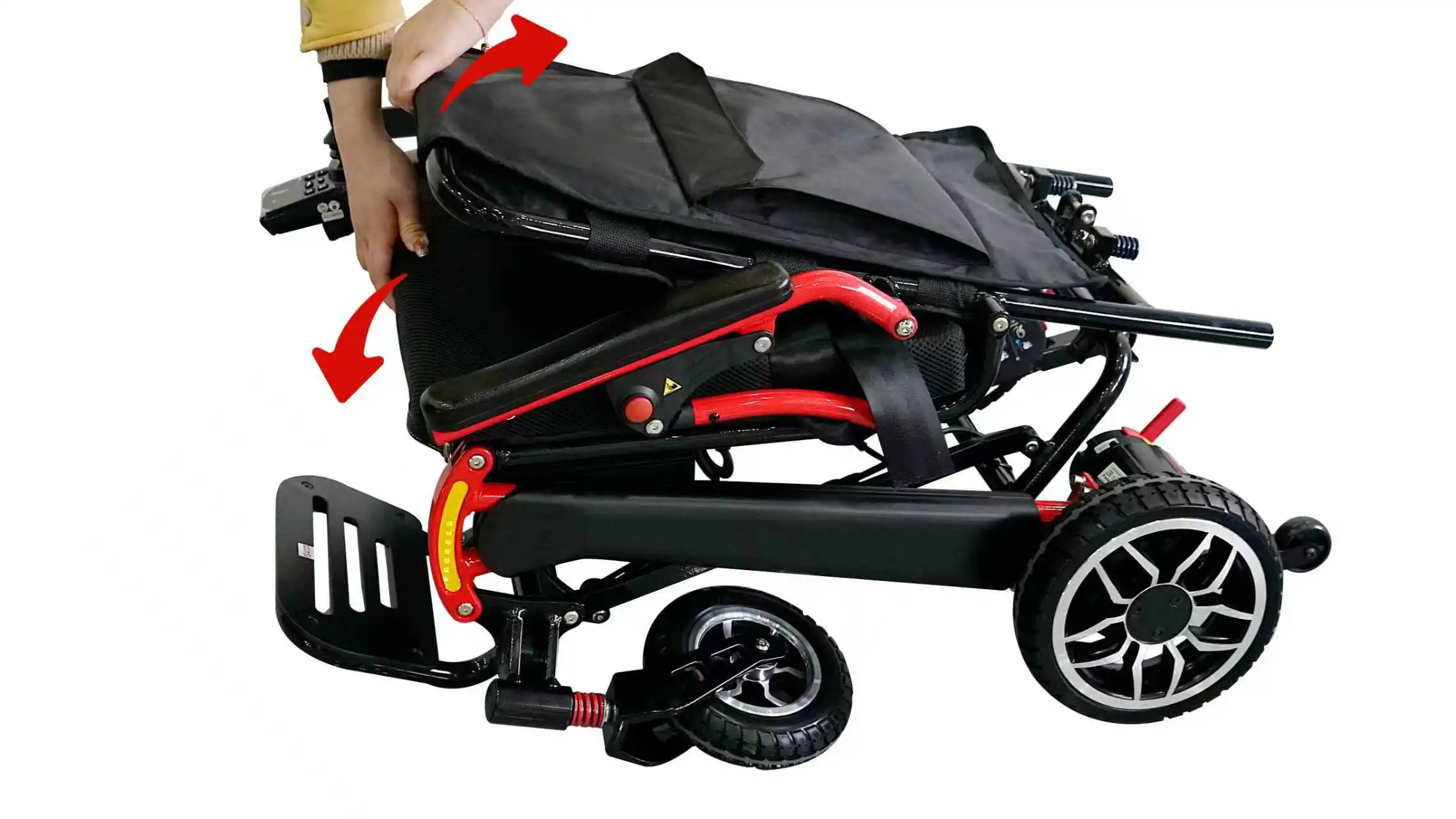
Electric folding wheelchair, foldable automatic wheelchair, auto folding electric wheelchairs, auto folding power wheelchair, auto folding power electric wheelchair, auto folding powered wheelchair, auto folding electric power wheelchair, auto folding powerchair, auto folding electric powerchair, auto folding motorized wheelchair, auto folding electrically powered wheelchair, auto folding battery operated wheelchair, auto folding battery powered wheelchairs, auto folding electric disabled chair, auto folding electric mobile wheelchair, auto folding electric mobility wheelchairs, auto folding electric motorized wheelchair, auto folding electric power wheelchair, auto folding electric powered wheelchair, auto folding electrical wheelchair, auto folding electronic wheelchair, auto folding mechanised wheelchair, auto folding mobility electric wheelchairs, auto folding motor wheelchair, auto folding motorised wheelchairs, auto folding power electric wheelchair, auto folding rechargeable wheelchair, auto folding wheelchair electric, auto folding wheelchair with battery, auto folding wheelchair battery operated, auto folding wheelchair electric, auto folding wheelchair motorized, auto folding wheelchair with battery, automatic folding electric wheelchairs, automatic folding power wheelchair, Automatic folding power electric wheelchair, automated folding power electric wheelchair, Self foldable power electric wheelchair, smart folding power electric wheelchair, electric fold up power electric wheelchair, electric mobility aid, electric mobility aids, mobility devices, power mobility device, mobility assistive equipment, pmd, mae

The Locking System: Safety Through Simplicity

A folding wheelchair that unfolded accidentally would be a serious safety hazard. That's why redundant locking systems are essential.

At the most basic level, a locking mechanism uses the same power source to both unlock and lock the frame, ensuring the chair stays securely closed when folded and rigidly locked when open.

Key locking features to look for:

  • Audible click: You should hear or feel a positive lock when the chair reaches full extension.

  • Secondary lock: Some premium models include an optional locking fastener that keeps the chair securely folded during transport—no more holding the chair closed with one hand while trying to lift it.

  • Pinch-point protection: Hinges and latches should be designed to prevent fingers from getting caught during folding.

The Frame: Materials That Enable Portability

A folding mechanism is only as good as the frame it connects. Modern folding wheelchairs use one of three primary materials:

Aerospace-grade aluminum (6061-T6 or 7005 series): The most common choice for folding frames, offering excellent strength-to-weight ratio at an affordable price. Many premium folding chairs use 3D-forged aluminum components for critical joints, machined to precise tolerances.

High-strength steel alloys: Heavier but extraordinarily durable. Steel frames may be appropriate for bariatric users or those who rarely transport their chair.

Carbon fiber: Ultra-light (25-50% lighter than aluminum) with superior vibration damping, but significantly more expensive.

The key engineering challenge is maintaining frame stiffness despite having hinges. A well-designed folding chair should feel indistinguishable from a rigid-frame chair once locked open—no flex, no wobble, no play in the joints.


One-Button Electric Folding: The Ultimate Convenience

For users with limited hand strength or dexterity, manual folding—even one-touch manual—may still be challenging. The solution is fully automatic folding.

These systems use a small electric motor, often integrated into the seat or frame, that drives the folding mechanism. Press a button, and the motor does all the work:

  • Manual operation: Press the fold button, and the chair unfolds itself. Sit down, and you're ready to go.

  • Remote control: Some models include a key fob or smartphone app, allowing you to fold or unfold the chair from several feet away.

  • Fold time: Typically under 10 seconds for the full cycle.

Automatic folding adds weight and cost, but for users who cannot manage manual folding, it's transformative.


Real-World Engineering: What to Look For

When evaluating a one-touch folding wheelchair—whether for yourself, a family member, or your business—here are the concrete engineering details you should check:

In the Showroom or Product Spec Sheet

  1. Hinge reinforcement: Are the hinge joints visibly reinforced with additional material or gussets? If the hinge looks like an afterthought, it probably is.

  2. Wobble test: Unfold the chair and try to rock the frame side-to-side. Any detectable movement at the hinge indicates potential long-term reliability issues.

  3. Locking confirmation: Does the locking mechanism produce an audible click when the chair reaches full extension? Absence of positive lock is a safety concern.

  4. Finger safety: Place your hand near the hinge area during folding (carefully!). Are any pinch points exposed? Good designs shield moving parts.

  5. Fold consistency: Fold and unfold the chair 10 times in a row. Does it become easier or harder? Does the alignment shift? Consistent performance indicates proper tolerances.

  6. Balance when folded: When folded, does the chair stand upright on its own? Balanced weight distribution makes transport significantly easier.

Durability Signals That Matter

  • Cycle testing: Ask if the manufacturer has performed ISO 7176-8 fatigue testing, the international standard for wheelchair static, impact, and fatigue strength.

  • Grade 12.9 hardware: The highest standard for mechanical fasteners, with tensile strength up to 1200 MPa, used in critical folding joints.

  • Warranty on folding mechanism: A manufacturer confident in their hinge engineering will back it with a comprehensive warranty.


Common Engineering Problems (And How to Avoid Them)

Even well-designed folding systems can develop issues. Here's what users report and how manufacturers address them:

Frame play after repeated folding: Over time, less robust hinges develop subtle wobble. The fix is reinforced hinge geometry and precision tolerances—hinge components machined to fit perfectly, not cast or stamped.

Folding becomes harder over time: Dirt and grit accumulate in the folding joints. Good designs use sealed bearings or protected pivot points. Regular cleaning with compressed air helps.

Unintentional unfolding during transport: The folding lock should be fail-secure—it requires deliberate force to release, not just gravity or minor vibration.

Battery cable strain in motorized folders: Automatic folding chairs route cables through the folding mechanism. Poor cable management leads to wire fatigue and electrical failure. Relief loops and strain-relief connectors prevent this.


How Yutong-Everycare Engineers Its One-Touch Folding Systems

At Yutong-Everycare , our one-touch folding technology wasn't designed in isolation. It was engineered alongside the rest of the chair, with every component optimized for the folding experience.

Our YT-W2301, YT-W2402, YT-W2402T, YT-W2301L exemplify this integrated approach:

  • High-strength aerospace-grade aluminum frame for exceptional strength-to-weight ratio

  • Precision-machined folding hinges with reinforced geometry for long-term rigidity

  • Positive locking mechanism with tactile click confirmation

  • Balanced weight distribution so the folded chair stands upright on its own

  • Protective pinch-point design for safe one-handed operation

Whether you choose our manual one-touch folding or our fully automatic electric folding model, you're getting the same underlying engineering philosophy: every hinge, joint, and latch is designed to withstand thousands of cycles while maintaining perfect alignment.

We test our folding mechanisms to ISO 7176-8 standards, ensuring static strength, impact resistance, and fatigue life suitable for daily use. Our critical hardware components, including the folding joints, use Grade 12.9 high-strength bolts—the highest standard for mechanical fasteners.


Frequently Asked Questions

Q: How many times can a one-touch folding mechanism be used?
A: Premium hinges are tested to over 1 million cycles. With normal daily folding (2-4 times per day), that's theoretically several centuries of use. Realistically, hinge components will outlast the rest of the chair.

Q: Are motorized folding systems reliable?
A: Yes, when properly engineered. Look for manufacturers with established track records. The motor itself is a simple component; the real engineering challenge is protecting the electrical connections and wiring harness from repetitive stress.

Q: Is it safe for the user to fold the chair while seated?
A: No. All folding mechanisms—manual and motorized—require the chair to be unoccupied. Never attempt to fold or unfold a mobility device while seated.

Q: Do one-touch chairs feel less stable than rigid frames?
A: A well-designed folding chair should feel every bit as stable as a rigid frame once locked open. If you can feel movement at the hinge, that's a sign of poor engineering.

Q: Can one-touch chairs be taken on airplanes?
A: Yes, provided they meet airline size and battery regulations. The ability to fold quickly is actually a major advantage at airport security and boarding. Many users find they can keep their chair with them through security and fold it at the gate for loading.

Q: Do one-touch mechanisms require maintenance?
A: Minimal. Keep hinge joints clean and dry. Lubrication is rarely needed with modern sealed bearings. The locking mechanism should be periodically checked for debris.


Conclusion

The engineering behind one-touch folding wheelchairs has fundamentally changed what independent mobility looks like. No longer do users need to choose between a stable, comfortable chair and a portable one. No longer must they rely on others for basic transport logistics.

From the 3D-forged aluminum hinge that opens and closes a million times without play, to the electric motor that folds your chair at the press of a button, every component is engineered for one purpose: to make mobility simple.

Because the best mobility device isn't the one with the most features. It's the one that works so seamlessly you don't think about it at all.

Ready to experience effortless folding for yourself? Explore the Yutong-Everycare collection and discover what happens when engineering meets independence.

This response is AI-generated, for reference only.


Imagine arriving at an airport check-in desk after a long journey. You have a connection to catch and luggage to manage. With a traditional wheelchair, you'd need to disassemble components, wrestle with cross-braces, possibly remove wheels, and pray everything fits back together at your destination. With a modern one-touch folding wheelchair, you press a button or release a latch, and within seconds—usually less than three seconds—your full-sized mobility device transforms into a compact, luggage-like package ready for transport.

This isn't magic. It's the result of decades of engineering refinement, material science breakthroughs, and a fundamental rethinking of what a wheelchair should be.

This article explores the engineering principles that make one-touch folding possible, the critical components that ensure reliability, and what you should look for when evaluating a folding mobility device.

Electric folding wheelchair, foldable automatic wheelchair, auto folding electric wheelchairs, auto folding power wheelchair, auto folding power electric wheelchair, auto folding powered wheelchair, auto folding electric power wheelchair, auto folding powerchair, auto folding electric powerchair, auto folding motorized wheelchair, auto folding electrically powered wheelchair, auto folding battery operated wheelchair, auto folding battery powered wheelchairs, auto folding electric disabled chair, auto folding electric mobile wheelchair, auto folding electric mobility wheelchairs, auto folding electric motorized wheelchair, auto folding electric power wheelchair, auto folding electric powered wheelchair, auto folding electrical wheelchair, auto folding electronic wheelchair, auto folding mechanised wheelchair, auto folding mobility electric wheelchairs, auto folding motor wheelchair, auto folding motorised wheelchairs, auto folding power electric wheelchair, auto folding rechargeable wheelchair, auto folding wheelchair electric, auto folding wheelchair with battery, auto folding wheelchair battery operated, auto folding wheelchair electric, auto folding wheelchair motorized, auto folding wheelchair with battery, automatic folding electric wheelchairs, automatic folding power wheelchair, Automatic folding power electric wheelchair, automated folding power electric wheelchair, Self foldable power electric wheelchair, smart folding power electric wheelchair, electric fold up power electric wheelchair, electric mobility aid, electric mobility aids, mobility devices, power mobility device, mobility assistive equipment, pmd, mae


The Evolution of Folding Wheelchairs: From Cross-Braces to One-Touch

To appreciate how far folding technology has come, it helps to understand where it started.

The Traditional Cross-Brace Design

For over a century, the most common folding mechanism in manual wheelchairs has been the tubular cross-brace system. Two tubes cross in an "X" pattern, pinned at the center. Pull upward on the seat sling, and the cross tubes pivot inward, bringing the side frames together.

This design is simple, effective, and widely used. But it has significant limitations:

  • Two hands required: You typically need both hands to fold and unfold.

  • Strength required: Many users with limited upper body strength cannot operate the mechanism independently.

  • No positive lock: The unfolded frame relies on gravity and the seat sling for stability, not a mechanical lock.

  • Seat must be loose: The seat sling cannot attach firmly to the side frames, or it would prevent folding.

For users who needed assistance anyway, these limitations were acceptable. But for independent, active travelers, they were deal-breakers.

The Shift to Purpose-Built Folding Systems

Engineers began asking a different question: instead of adapting the cross-brace design, what if we designed a wheelchair specifically to fold quickly and compactly?

This led to several innovations:

Single-degree-of-freedom mechanisms: Research developed wheelchair frames that fold using a single motion—pull one handle, and every joint moves in coordinated unison, with no separate parts to remove and no tools required. The result folds into a suitcase-sized package that can be wheeled upright like luggage.

Split-frame designs: Some modern wheelchairs use a central hinge that allows the two side frames to fold together like a book, rather than scissoring inward.

Motorized folding: The logical endpoint of this evolution: a button-activated electric motor that performs the entire folding sequence automatically.


Anatomy of a One-Touch Folding System: How It Works

Let's break down the engineering components that make one-touch folding possible.

The Folding Mechanism Itself

The heart of any folding wheelchair is, unsurprisingly, the folding mechanism. One-touch systems fall into two main categories:

Manual one-touch (latch release): The user presses a single button or pulls a single lever to unlock the frame. The chair then folds under its own weight or with a gentle push. Some designs incorporate a gas spring that provides assisted opening and closing.

Fully automatic (motorized): The user presses a button on a joystick, remote control, or smartphone app. An electric motor drives the folding sequence, completely eliminating physical effort. Some models can fold remotely, allowing you to prepare the chair while approaching your vehicle.

Whichever type you prefer, the core requirement is the same: the entire folding sequence must be completed in one continuous motion, with no intermediate steps, no parts to remove, and no tools required.

The Hinge: The Most Important Component No One Talks About

For a folding wheelchair to remain safe and stable after thousands of folds, every hinge must be engineered for extreme durability.

Premium folding wheelchairs use hinges manufactured from 3D-forged 6061-T6 aerospace-grade aluminum blanks, precision-milled with 5-axis CNC equipment. This process ensures perfect fit and maximum strength without excess material.

How durable is a properly engineered hinge? Independent testing (following ISO 7176-8 standards, the international benchmark for wheelchair static, impact, and fatigue strength) has demonstrated hinge cycle life exceeding 1 million folds. That means a hinge tested through over 1,000,000 open-close cycles without failure.

The weakest point in any folding chair is the joint. Premium hinges do not wobble. Over time, weaker hinge designs develop subtle play—a tiny amount of movement that grows worse with use. On uneven sidewalks or ramps, that play translates into an unstable, unsettling ride.

Electric folding wheelchair, foldable automatic wheelchair, auto folding electric wheelchairs, auto folding power wheelchair, auto folding power electric wheelchair, auto folding powered wheelchair, auto folding electric power wheelchair, auto folding powerchair, auto folding electric powerchair, auto folding motorized wheelchair, auto folding electrically powered wheelchair, auto folding battery operated wheelchair, auto folding battery powered wheelchairs, auto folding electric disabled chair, auto folding electric mobile wheelchair, auto folding electric mobility wheelchairs, auto folding electric motorized wheelchair, auto folding electric power wheelchair, auto folding electric powered wheelchair, auto folding electrical wheelchair, auto folding electronic wheelchair, auto folding mechanised wheelchair, auto folding mobility electric wheelchairs, auto folding motor wheelchair, auto folding motorised wheelchairs, auto folding power electric wheelchair, auto folding rechargeable wheelchair, auto folding wheelchair electric, auto folding wheelchair with battery, auto folding wheelchair battery operated, auto folding wheelchair electric, auto folding wheelchair motorized, auto folding wheelchair with battery, automatic folding electric wheelchairs, automatic folding power wheelchair, Automatic folding power electric wheelchair, automated folding power electric wheelchair, Self foldable power electric wheelchair, smart folding power electric wheelchair, electric fold up power electric wheelchair, electric mobility aid, electric mobility aids, mobility devices, power mobility device, mobility assistive equipment, pmd, mae

The Locking System: Safety Through Simplicity

A folding wheelchair that unfolded accidentally would be a serious safety hazard. That's why redundant locking systems are essential.

At the most basic level, a locking mechanism uses the same power source to both unlock and lock the frame, ensuring the chair stays securely closed when folded and rigidly locked when open.

Key locking features to look for:

  • Audible click: You should hear or feel a positive lock when the chair reaches full extension.

  • Secondary lock: Some premium models include an optional locking fastener that keeps the chair securely folded during transport—no more holding the chair closed with one hand while trying to lift it.

  • Pinch-point protection: Hinges and latches should be designed to prevent fingers from getting caught during folding.

The Frame: Materials That Enable Portability

A folding mechanism is only as good as the frame it connects. Modern folding wheelchairs use one of three primary materials:

Aerospace-grade aluminum (6061-T6 or 7005 series): The most common choice for folding frames, offering excellent strength-to-weight ratio at an affordable price. Many premium folding chairs use 3D-forged aluminum components for critical joints, machined to precise tolerances.

High-strength steel alloys: Heavier but extraordinarily durable. Steel frames may be appropriate for bariatric users or those who rarely transport their chair.

Carbon fiber: Ultra-light (25-50% lighter than aluminum) with superior vibration damping, but significantly more expensive.

The key engineering challenge is maintaining frame stiffness despite having hinges. A well-designed folding chair should feel indistinguishable from a rigid-frame chair once locked open—no flex, no wobble, no play in the joints.


One-Button Electric Folding: The Ultimate Convenience

For users with limited hand strength or dexterity, manual folding—even one-touch manual—may still be challenging. The solution is fully automatic folding.

These systems use a small electric motor, often integrated into the seat or frame, that drives the folding mechanism. Press a button, and the motor does all the work:

  • Manual operation: Press the fold button, and the chair unfolds itself. Sit down, and you're ready to go.

  • Remote control: Some models include a key fob or smartphone app, allowing you to fold or unfold the chair from several feet away.

  • Fold time: Typically under 10 seconds for the full cycle.

Automatic folding adds weight and cost, but for users who cannot manage manual folding, it's transformative.


Real-World Engineering: What to Look For

When evaluating a one-touch folding wheelchair—whether for yourself, a family member, or your business—here are the concrete engineering details you should check:

In the Showroom or Product Spec Sheet

  1. Hinge reinforcement: Are the hinge joints visibly reinforced with additional material or gussets? If the hinge looks like an afterthought, it probably is.

  2. Wobble test: Unfold the chair and try to rock the frame side-to-side. Any detectable movement at the hinge indicates potential long-term reliability issues.

  3. Locking confirmation: Does the locking mechanism produce an audible click when the chair reaches full extension? Absence of positive lock is a safety concern.

  4. Finger safety: Place your hand near the hinge area during folding (carefully!). Are any pinch points exposed? Good designs shield moving parts.

  5. Fold consistency: Fold and unfold the chair 10 times in a row. Does it become easier or harder? Does the alignment shift? Consistent performance indicates proper tolerances.

  6. Balance when folded: When folded, does the chair stand upright on its own? Balanced weight distribution makes transport significantly easier.

Durability Signals That Matter

  • Cycle testing: Ask if the manufacturer has performed ISO 7176-8 fatigue testing, the international standard for wheelchair static, impact, and fatigue strength.

  • Grade 12.9 hardware: The highest standard for mechanical fasteners, with tensile strength up to 1200 MPa, used in critical folding joints.

  • Warranty on folding mechanism: A manufacturer confident in their hinge engineering will back it with a comprehensive warranty.


Common Engineering Problems (And How to Avoid Them)

Even well-designed folding systems can develop issues. Here's what users report and how manufacturers address them:

Frame play after repeated folding: Over time, less robust hinges develop subtle wobble. The fix is reinforced hinge geometry and precision tolerances—hinge components machined to fit perfectly, not cast or stamped.

Folding becomes harder over time: Dirt and grit accumulate in the folding joints. Good designs use sealed bearings or protected pivot points. Regular cleaning with compressed air helps.

Unintentional unfolding during transport: The folding lock should be fail-secure—it requires deliberate force to release, not just gravity or minor vibration.

Battery cable strain in motorized folders: Automatic folding chairs route cables through the folding mechanism. Poor cable management leads to wire fatigue and electrical failure. Relief loops and strain-relief connectors prevent this.


How Yutong-Everycare Engineers Its One-Touch Folding Systems

At Yutong-Everycare , our one-touch folding technology wasn't designed in isolation. It was engineered alongside the rest of the chair, with every component optimized for the folding experience.

Our YT-W2301, YT-W2402, YT-W2402T, YT-W2301L exemplify this integrated approach:

  • High-strength aerospace-grade aluminum frame for exceptional strength-to-weight ratio

  • Precision-machined folding hinges with reinforced geometry for long-term rigidity

  • Positive locking mechanism with tactile click confirmation

  • Balanced weight distribution so the folded chair stands upright on its own

  • Protective pinch-point design for safe one-handed operation

Whether you choose our manual one-touch folding or our fully automatic electric folding model, you're getting the same underlying engineering philosophy: every hinge, joint, and latch is designed to withstand thousands of cycles while maintaining perfect alignment.

We test our folding mechanisms to ISO 7176-8 standards, ensuring static strength, impact resistance, and fatigue life suitable for daily use. Our critical hardware components, including the folding joints, use Grade 12.9 high-strength bolts—the highest standard for mechanical fasteners.


Frequently Asked Questions

Q: How many times can a one-touch folding mechanism be used?
A: Premium hinges are tested to over 1 million cycles. With normal daily folding (2-4 times per day), that's theoretically several centuries of use. Realistically, hinge components will outlast the rest of the chair.

Q: Are motorized folding systems reliable?
A: Yes, when properly engineered. Look for manufacturers with established track records. The motor itself is a simple component; the real engineering challenge is protecting the electrical connections and wiring harness from repetitive stress.

Q: Is it safe for the user to fold the chair while seated?
A: No. All folding mechanisms—manual and motorized—require the chair to be unoccupied. Never attempt to fold or unfold a mobility device while seated.

Q: Do one-touch chairs feel less stable than rigid frames?
A: A well-designed folding chair should feel every bit as stable as a rigid frame once locked open. If you can feel movement at the hinge, that's a sign of poor engineering.

Q: Can one-touch chairs be taken on airplanes?
A: Yes, provided they meet airline size and battery regulations. The ability to fold quickly is actually a major advantage at airport security and boarding. Many users find they can keep their chair with them through security and fold it at the gate for loading.

Q: Do one-touch mechanisms require maintenance?
A: Minimal. Keep hinge joints clean and dry. Lubrication is rarely needed with modern sealed bearings. The locking mechanism should be periodically checked for debris.


Conclusion

The engineering behind one-touch folding wheelchairs has fundamentally changed what independent mobility looks like. No longer do users need to choose between a stable, comfortable chair and a portable one. No longer must they rely on others for basic transport logistics.

From the 3D-forged aluminum hinge that opens and closes a million times without play, to the electric motor that folds your chair at the press of a button, every component is engineered for one purpose: to make mobility simple.

Because the best mobility device isn't the one with the most features. It's the one that works so seamlessly you don't think about it at all.

Ready to experience effortless folding for yourself? Explore the Yutong-Everycare collection and discover what happens when engineering meets independence.

This response is AI-generated, for reference only.