
Copyright © 2024 Yutong (Zhejiang) Medical Technology Co. , Ltd.
Pack Like a Pro: Fitting Your Wheelchair into Any Car Trunk
Picture this: you’re ready for a day out, the sun is shining, but the thought of wrestling a bulky wheelchair into your car casts a shadow over the day. For many, this logistical hurdle is the biggest barrier to spontaneous adventures. But what if fitting your wheelchair into the car was as simple as loading a piece of luggage? The secret lies not in a bigger car, but in a smarter, more portable wheelchair and a pro packing method.
This guide will walk you through the steps to seamlessly load your wheelchair into virtually any car trunk, turning a chore into a quick, effortless task. The cornerstone of this freedom? A truly lightweight and foldable travel wheelchair.

Step 1: Know Your Trunk & Your Chair (The Pre-Trip Audit)
Before you lift a thing, do this quick 5-minute audit.
-
Measure Your Trunk:
-
Key Dimensions: Note the length, width, and height of the trunk opening and the main cargo space. Pay special attention to the height from the bumper lip to the trunk lid.
-
Clear the Clutter: Remove any unnecessary items to maximize usable space.
-
-
Know Your Chair’s Folded Specs:
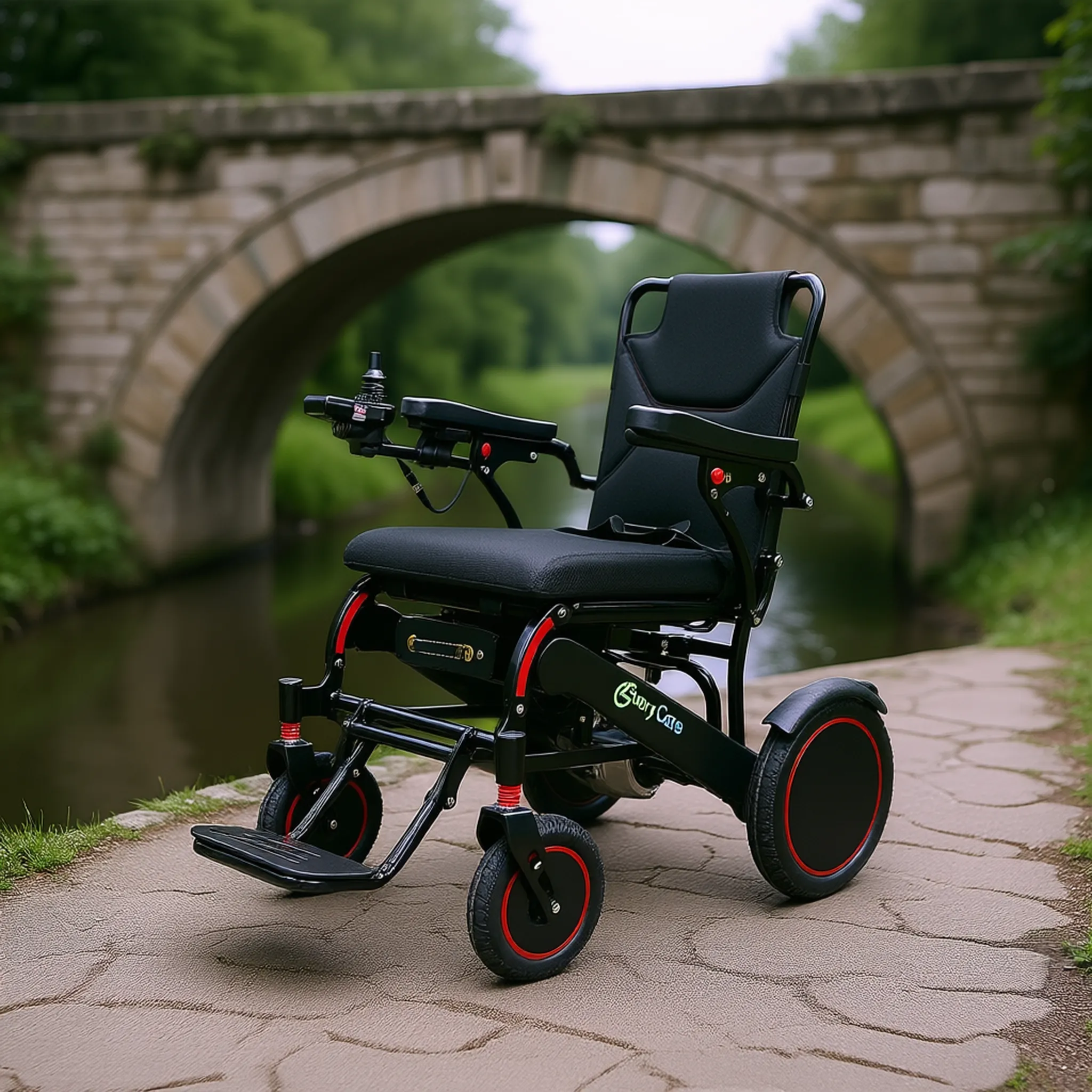
This is where a modern portable wheelchair shines. Check its folded dimensions (LxWxH) and folded weight. Our wheelchairs, for instance, are engineered to fold into a compact, slim profile that prioritizes flat, rectangular packing over an awkward, bulky shape.
Step 2: The Pro Packing Sequence
Follow these steps in order for maximum efficiency and minimal strain.
1. The Smart Fold: Utilize your chair’s intuitive folding mechanism. A high-quality chair will have a one-touch or simple two-step fold that locks securely into its most compact form. Ensure the footrests are flipped up and any removable parts (like the battery) are taken off to make the unit even slimmer and lighter.
2. The Lift: Use proper lifting technique. Bend your knees, keep your back straight, and use the strength in your legs. The lightweight construction of advanced travel chairs—often using aircraft-grade aluminum—makes this lift surprisingly easy, reducing the risk of back strain for you or your caregiver.
3. The Angle of Attack: Don’t just lift and push. Tilt the folded wheelchair and guide the lowest corner into the trunk first. Slide it in, rather than lifting it over the bumper entirely. This minimizes scraping and uses physics to your advantage.
4. Strategic Positioning:
-
Lay It Flat: Ideally, place the folded chair flat on the trunk floor. Its sleek, low-profile design should allow it to fit without obstructing the trunk lid.
-
Utilize Nooks: If needed, the chair can often be positioned vertically along the side of the trunk, especially if it has a slim folded width.
-
Leave Room: The goal is to have the chair take up only part of the space, leaving ample room for bags, groceries, or other travel essentials.
Step 3: Why Your Wheelchair Choice is 80% of the Battle
The truth is, no packing technique can overcome a wheelchair that isn’t designed for portability. The right chair does most of the work for you. Here are the non-negotiable features that make “pro packing” possible:
-
Ultra-Lightweight Frame: This is the most critical factor. A chair that weighs under 50 lbs (23 kg) is a game-changer. It transforms the task from a heavy lift into a manageable one.
-
True Compact Fold: It’s not just about folding; it’s about folding well. The chair should collapse into a dense, predictable shape—not a wobbling tangle of components. Look for a flat-fold design that minimizes its footprint.
-
Durable Yet Light Materials: High-strength aluminum alloys provide the sturdiness you need without the punishing weight of steel, ensuring your chair is both reliable and easy to handle.
-
Thoughtful Design Touches: Integrated carry handles, scratch-resistant finishes on contact points, and a balanced center of gravity when folded all contribute to a smoother loading experience.
FAQ: Your Top Questions Answered
Q1: Will a portable electric wheelchair fit in a small car like a Honda Civic or Toyota Corolla?
A: Absolutely. This is the primary advantage of a well-designed portable wheelchair. By choosing a model with a compact flat-fold design and a lightweight frame, it can easily fit into the trunk of most sedans and compact cars. Always check the specific folded dimensions against your trunk measurements.
Q2: I travel alone. Can I load the wheelchair by myself?
A: Yes, and this is a key design goal for modern travel chairs. The combination of light weight and an easy-lift design empowers independent users. Many find that with a bit of practice, the process becomes quick and simple to do solo.
Q3: How do I protect my car’s interior from scratches?
A: A few simple tips help:
-
Use a soft moving blanket or trunk liner as a protective base.
-
Ensure your wheelchair has smooth, rounded edges on its frame when folded.
-
Some high-end models come with a travel bag or sleeve specifically for this purpose.
Q4: Does the battery need to be removed for transport?
A: For safety and to reduce the lifting weight, it is often recommended. A quick-release battery system allows you to remove the (typically heavy) battery, carry it separately, and slide a much lighter chair frame into the trunk. Always consult your user manual.
Conclusion: Redefine What’s Possible
Mastering the art of packing your wheelchair isn’t just about saving time; it’s about reclaiming spontaneity and expanding your world. When the barrier of “will it fit?” is removed, every invitation becomes a “yes,” and every destination feels within reach.
The journey begins with choosing the right tool. A lightweight, intelligently foldable wheelchair isn’t a luxury—it’s the key to a life where your mobility aid enables adventure, rather than limiting it.
Ready to pack like a pro and go anywhere? Explore our range of ultra-portable electric wheelchairs engineered specifically for effortless travel and car transport. Discover the perfect blend of lightweight design, elegant aesthetics, and pro-grade functionality on our product page today.
Picture this: you’re ready for a day out, the sun is shining, but the thought of wrestling a bulky wheelchair into your car casts a shadow over the day. For many, this logistical hurdle is the biggest barrier to spontaneous adventures. But what if fitting your wheelchair into the car was as simple as loading a piece of luggage? The secret lies not in a bigger car, but in a smarter, more portable wheelchair and a pro packing method.
This guide will walk you through the steps to seamlessly load your wheelchair into virtually any car trunk, turning a chore into a quick, effortless task. The cornerstone of this freedom? A truly lightweight and foldable travel wheelchair.
Step 1: Know Your Trunk & Your Chair (The Pre-Trip Audit)
Before you lift a thing, do this quick 5-minute audit.
-
Measure Your Trunk:
-
Key Dimensions: Note the length, width, and height of the trunk opening and the main cargo space. Pay special attention to the height from the bumper lip to the trunk lid.
-
Clear the Clutter: Remove any unnecessary items to maximize usable space.
-
-
Know Your Chair’s Folded Specs:
This is where a modern portable wheelchair shines. Check its folded dimensions (LxWxH) and folded weight. Our wheelchairs, for instance, are engineered to fold into a compact, slim profile that prioritizes flat, rectangular packing over an awkward, bulky shape.
Step 2: The Pro Packing Sequence
Follow these steps in order for maximum efficiency and minimal strain.
1. The Smart Fold: Utilize your chair’s intuitive folding mechanism. A high-quality chair will have a one-touch or simple two-step fold that locks securely into its most compact form. Ensure the footrests are flipped up and any removable parts (like the battery) are taken off to make the unit even slimmer and lighter.
2. The Lift: Use proper lifting technique. Bend your knees, keep your back straight, and use the strength in your legs. The lightweight construction of advanced travel chairs—often using aircraft-grade aluminum—makes this lift surprisingly easy, reducing the risk of back strain for you or your caregiver.
3. The Angle of Attack: Don’t just lift and push. Tilt the folded wheelchair and guide the lowest corner into the trunk first. Slide it in, rather than lifting it over the bumper entirely. This minimizes scraping and uses physics to your advantage.
4. Strategic Positioning:
-
Lay It Flat: Ideally, place the folded chair flat on the trunk floor. Its sleek, low-profile design should allow it to fit without obstructing the trunk lid.
-
Utilize Nooks: If needed, the chair can often be positioned vertically along the side of the trunk, especially if it has a slim folded width.
-
Leave Room: The goal is to have the chair take up only part of the space, leaving ample room for bags, groceries, or other travel essentials.
Step 3: Why Your Wheelchair Choice is 80% of the Battle
The truth is, no packing technique can overcome a wheelchair that isn’t designed for portability. The right chair does most of the work for you. Here are the non-negotiable features that make “pro packing” possible:
-
Ultra-Lightweight Frame: This is the most critical factor. A chair that weighs under 50 lbs (23 kg) is a game-changer. It transforms the task from a heavy lift into a manageable one.
-
True Compact Fold: It’s not just about folding; it’s about folding well. The chair should collapse into a dense, predictable shape—not a wobbling tangle of components. Look for a flat-fold design that minimizes its footprint.
-
Durable Yet Light Materials: High-strength aluminum alloys provide the sturdiness you need without the punishing weight of steel, ensuring your chair is both reliable and easy to handle.
-
Thoughtful Design Touches: Integrated carry handles, scratch-resistant finishes on contact points, and a balanced center of gravity when folded all contribute to a smoother loading experience.
FAQ: Your Top Questions Answered
Q1: Will a portable electric wheelchair fit in a small car like a Honda Civic or Toyota Corolla?
A: Absolutely. This is the primary advantage of a well-designed portable wheelchair. By choosing a model with a compact flat-fold design and a lightweight frame, it can easily fit into the trunk of most sedans and compact cars. Always check the specific folded dimensions against your trunk measurements.
Q2: I travel alone. Can I load the wheelchair by myself?
A: Yes, and this is a key design goal for modern travel chairs. The combination of light weight and an easy-lift design empowers independent users. Many find that with a bit of practice, the process becomes quick and simple to do solo.
Q3: How do I protect my car’s interior from scratches?
A: A few simple tips help:
-
Use a soft moving blanket or trunk liner as a protective base.
-
Ensure your wheelchair has smooth, rounded edges on its frame when folded.
-
Some high-end models come with a travel bag or sleeve specifically for this purpose.
Q4: Does the battery need to be removed for transport?
A: For safety and to reduce the lifting weight, it is often recommended. A quick-release battery system allows you to remove the (typically heavy) battery, carry it separately, and slide a much lighter chair frame into the trunk. Always consult your user manual.
Conclusion: Redefine What’s Possible
Mastering the art of packing your wheelchair isn’t just about saving time; it’s about reclaiming spontaneity and expanding your world. When the barrier of “will it fit?” is removed, every invitation becomes a “yes,” and every destination feels within reach.
The journey begins with choosing the right tool. A lightweight, intelligently foldable wheelchair isn’t a luxury—it’s the key to a life where your mobility aid enables adventure, rather than limiting it.
Ready to pack like a pro and go anywhere? Explore our range of ultra-portable electric wheelchairs engineered specifically for effortless travel and car transport. Discover the perfect blend of lightweight design, elegant aesthetics, and pro-grade functionality on our product page today.
Make every space a safer place!