
Copyright © 2024 Yutong (Zhejiang) Medical Technology Co. , Ltd.
What Are Powered Mobility Devices? A Beginner's Guide
If you or a loved one is beginning to explore options for maintaining independence and mobility, you've likely encountered the term "powered mobility devices." But what exactly does this term mean, and how do you know which type is right for you?
This beginner's guide will walk you through everything you need to know about powered mobility devices—from what they are and who they benefit, to the different types available and how to choose the right one for your lifestyle.
What Are Powered Mobility Devices?
Powered mobility devices are battery-operated vehicles designed to assist individuals with limited mobility in moving from place to place. Unlike manual wheelchairs that require physical strength to push, powered devices use electric motors and rechargeable batteries to provide effortless transportation.
These devices serve as essential tools for:
-
Maintaining independence: Users can move around without relying on caregivers
-
Improving quality of life: Greater mobility means more social engagement and activity
-
Reducing physical strain: No need to push manual wheels, preserving energy for other activities
-
Enabling travel and exploration: Modern devices are designed to go anywhere life takes you
Who Benefits from Powered Mobility Devices?
Powered mobility devices can benefit a wide range of individuals:
| User Type | Common Needs |
|---|---|
| Seniors with age-related mobility decline | Easy-to-use, comfortable, and safe transportation for daily activities |
| Individuals with chronic conditions (arthritis, MS, Parkinson's) | Energy conservation and reduced joint strain |
| Those recovering from injury or surgery | Temporary or long-term mobility assistance |
| People with disabilities | Independence and accessibility in daily life |
| Active travelers with mobility challenges | Portable, travel-friendly solutions for exploration |
Types of Powered Mobility Devices
Understanding the different types of powered mobility devices is the first step in making an informed choice.
1. Powered Wheelchairs (Electric Wheelchairs)
Powered wheelchairs are chairs mounted on four to six wheels, powered by electric motors and controlled via a joystick or other interface. They are ideal for individuals who need full-time seating support.
Typical Features:
-
Comfortable seating with armrests and footrests
-
Joystick or alternative control systems
-
Various drive configurations (front-wheel, rear-wheel, mid-wheel drive)
-
Indoor and outdoor capability
Best For: Users who require significant postural support and spend extended periods in their chair.
2. Mobility Scooters
Mobility scooters resemble small vehicles with a steering tiller and a seat. They typically have three or four wheels and a platform for feet.
Typical Features:
-
Steering tiller (like a bicycle) for control
-
Swivel seat for easier transfers
-
Basket or storage compartment
-
Better outdoor performance on smooth surfaces
Best For: Users who can walk short distances but need assistance with longer journeys, and who have good upper body strength and trunk control.

3. Lightweight Travel Power Chairs
This is where modern innovation truly shines. Lightweight travel power chairs are a specialized category of powered wheelchairs designed specifically for portability and ease of use.
Typical Features:
-
Ultra-lightweight frames (often under 50 lbs / 23 kg)
-
Quick-fold or one-touch folding mechanisms
-
Compact folded size that fits in car trunks
-
Removable, airline-compliant lithium batteries
-
Modern, attractive designs that don't look clinical
Best For: Active individuals, frequent travelers, and those with limited storage space who refuse to let mobility challenges limit their lifestyle.
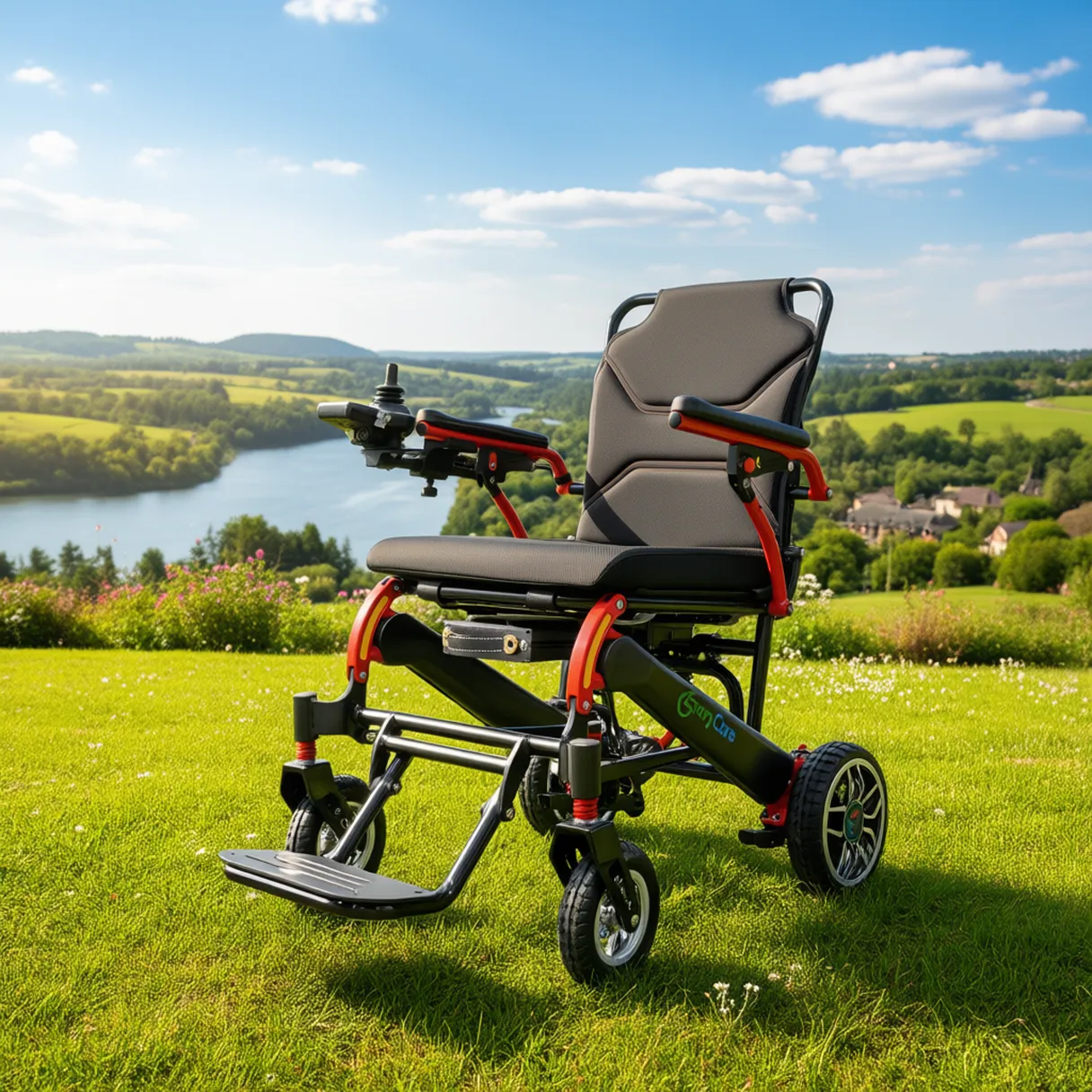
The Evolution of Powered Mobility: From Clinical to Cool
The powered mobility industry has undergone a dramatic transformation in recent years. Traditional devices were often:
-
Heavy and difficult to transport
-
Bulky and space-consuming
-
Clinical in appearance
-
Limited to indoor use
Today's modern powered mobility devices, particularly in the lightweight travel chair category, have completely reimagined what's possible:
| Traditional | Modern |
|---|---|
| 80-150 lbs | 25-50 lbs |
| Difficult to lift | Easy one-person handling |
| Bulky, awkward shape | Compact, flat-fold design |
| Medical, institutional look | Sleek, stylish aesthetics |
| Fixed, limited features | Modular, travel-ready design |
This evolution means that users no longer have to choose between functionality and style, or between power and portability.
Key Considerations When Choosing a Powered Mobility Device
1. Weight and Portability
Why it matters: If you plan to transport your device in a car, on public transit, or by airplane, weight and folded size are critical factors.
What to look for:
-
Total device weight (aim for under 50 lbs for true portability)
-
Folded dimensions (should fit in standard car trunks)
-
Removable battery for lighter lifting
-
Built-in carrying handles
2. Battery Life and Range
Why it matters: Your device should have enough range to cover your typical daily activities without anxiety.
What to look for:
-
Battery capacity (measured in Ah or Wh)
-
Real-world range (discount advertised range by 20-30%)
-
Removable batteries for easy charging
-
Airline compliance (under 300Wh for travel)
3. Comfort and Adjustability
Why it matters: You'll likely spend significant time in your device, so comfort is non-negotiable.
What to look for:
-
Padded, ergonomic seating
-
Adjustable armrests and footrests
-
Breathable, durable upholstery
-
Adequate back support
4. Ease of Use
Why it matters: The device should empower you, not frustrate you.
What to look for:
-
Intuitive controls (joystick, touchpad)
-
Simple folding mechanism (one-touch is ideal)
-
Clear battery indicators
-
Easy-to-reach adjustments
5. Design and Aesthetics
Why it matters: A device you feel good using is a device you'll use more often.
What to look for:
-
Modern, streamlined appearance
-
Attractive color options
-
Quality finishes that resist wear
-
Discreet, non-clinical look
6. Safety Features
Why it matters: Safety is the foundation of independence.
What to look for:
-
Reliable braking system (electromagnetic + manual)
-
Anti-tip wheels
-
Safety belt
-
Adequate lighting for visibility
-
Stable design on slopes and uneven terrain
How to Choose the Right Device for Your Lifestyle
Ask Yourself These Questions:
-
Where will I use it most?
-
Primarily indoors? → Look for compact, maneuverable designs
-
Mostly outdoors? → Consider larger wheels and more powerful motors
-
Both? → Seek versatile all-terrain capability
-
-
How will I transport it?
-
Car trunk? → Prioritize lightweight and compact fold
-
Air travel? → Ensure airline-compliant battery and dimensions
-
Rarely transport? → Weight may be less critical
-
-
Who will assist with handling?
-
Self-managed? → Ultra-lightweight is essential
-
Caregiver assistance available? → Some weight may be acceptable
-
-
What's my budget?
-
Entry-level ($1,000-2,000): Basic features, heavier frames
-
Mid-range ($2,000-3,500): Best value, good balance of features
-
Premium ($3,500+): Lightest weight, longest range, smart features
-
-
How important is appearance?
-
Very important → Seek modern, stylish designs with color options
-
Not a priority → Function may outweigh form
-
Why Lightweight, Foldable Powered Mobility Devices Are Gaining Popularity
The shift toward lightweight, foldable powered mobility devices reflects changing user needs and expectations:
1. Active Lifestyles Require Portability
Today's users aren't content to stay home. They want to visit family, travel, explore, and engage with the world. Heavy, bulky devices make this impossible.
2. Independence Means Self-Handling
When a device is light enough for the user to lift and fold themselves, they gain true independence—no waiting for assistance, no relying on others for simple transportation.
3. Space is Precious
Homes, cars, and hotel rooms have limited space. A device that folds flat and tucks away respects that reality.
4. Style Matters
Mobility devices are no longer hidden away. Users want equipment that reflects their personality and doesn't scream "medical device."
5. Technology Has Advanced
Modern batteries and materials (like aerospace-grade aluminum) make it possible to have both power AND portability—a combination that was impossible just a decade ago.
Introducing Yutong-Everycare Powered Mobility Solutions
At Yutong-Everycare, we've embraced the modern philosophy of powered mobility. Our devices are engineered around the principle that mobility should empower, not encumber.
Our powered mobility devices feature:
-
Ultra-lightweight construction using high-strength aerospace aluminum alloys
-
Patented one-touch folding technology for effortless storage and transport
-
Sleek, modern aesthetics with attractive color options
-
Removable, airline-compliant lithium batteries for true travel freedom
-
Ergonomic comfort for all-day use
-
Intuitive controls that anyone can master
We believe that a powered mobility device should be a passport to independence, not a reminder of limitations. That's why every detail—from the smooth fold to the beautiful finish—is designed with your freedom in mind.
Frequently Asked Questions About Powered Mobility Devices
Q: Do I need a prescription to buy a powered mobility device?
A: In most cases, no. You can purchase powered mobility devices directly from manufacturers or retailers. However, if you're seeking insurance reimbursement, a prescription may be required.
Q: Can I take my powered mobility device on an airplane?
A: Yes, but you must ensure your device meets airline requirements. Key considerations: battery type (lithium-ion must be under 300Wh and often carried on), device dimensions, and weight. Our travel-ready models are specifically designed for air travel.
Q: How long do batteries last?
A: Battery lifespan depends on usage and care. Quality lithium batteries typically last 2-3 years with proper maintenance. Range per charge varies from 10-25 miles depending on the model.
Q: How do I maintain my powered mobility device?
A: Regular maintenance includes cleaning, non-pneumatic tires cleaning, battery care, and occasional professional servicing.
Q: Can lightweight devices support heavier users?
A: Yes! Modern materials allow lightweight frames to support substantial weight. Our models offer weight capacities up to 100kg/220lbs while maintaining portability.
Q: Are powered mobility devices covered by insurance?
A: Coverage varies by country, insurance provider, and medical necessity. Check with your provider for specific coverage details.
Conclusion: Your Journey to Independence Starts Here
Powered mobility devices have transformed countless lives, restoring independence, enabling adventure, and improving quality of life. Whether you're a senior looking to stay active, a traveler with mobility challenges, or a caregiver seeking solutions for a loved one, there's a powered mobility device designed for your needs.
The key is finding the right balance of power, portability, comfort, and style for your unique lifestyle. And with modern lightweight, foldable options, you no longer have to compromise.
Ready to explore the freedom of modern powered mobility? Discover our collection of mobility devices—engineered for independence, designed for life.
If you or a loved one is beginning to explore options for maintaining independence and mobility, you've likely encountered the term "powered mobility devices." But what exactly does this term mean, and how do you know which type is right for you?
This beginner's guide will walk you through everything you need to know about powered mobility devices—from what they are and who they benefit, to the different types available and how to choose the right one for your lifestyle.
What Are Powered Mobility Devices?
Powered mobility devices are battery-operated vehicles designed to assist individuals with limited mobility in moving from place to place. Unlike manual wheelchairs that require physical strength to push, powered devices use electric motors and rechargeable batteries to provide effortless transportation.
These devices serve as essential tools for:
-
Maintaining independence: Users can move around without relying on caregivers
-
Improving quality of life: Greater mobility means more social engagement and activity
-
Reducing physical strain: No need to push manual wheels, preserving energy for other activities
-
Enabling travel and exploration: Modern devices are designed to go anywhere life takes you
Who Benefits from Powered Mobility Devices?
Powered mobility devices can benefit a wide range of individuals:
| User Type | Common Needs |
|---|---|
| Seniors with age-related mobility decline | Easy-to-use, comfortable, and safe transportation for daily activities |
| Individuals with chronic conditions (arthritis, MS, Parkinson's) | Energy conservation and reduced joint strain |
| Those recovering from injury or surgery | Temporary or long-term mobility assistance |
| People with disabilities | Independence and accessibility in daily life |
| Active travelers with mobility challenges | Portable, travel-friendly solutions for exploration |
Types of Powered Mobility Devices
Understanding the different types of powered mobility devices is the first step in making an informed choice.
1. Powered Wheelchairs (Electric Wheelchairs)
Powered wheelchairs are chairs mounted on four to six wheels, powered by electric motors and controlled via a joystick or other interface. They are ideal for individuals who need full-time seating support.
Typical Features:
-
Comfortable seating with armrests and footrests
-
Joystick or alternative control systems
-
Various drive configurations (front-wheel, rear-wheel, mid-wheel drive)
-
Indoor and outdoor capability
Best For: Users who require significant postural support and spend extended periods in their chair.
2. Mobility Scooters
Mobility scooters resemble small vehicles with a steering tiller and a seat. They typically have three or four wheels and a platform for feet.
Typical Features:
-
Steering tiller (like a bicycle) for control
-
Swivel seat for easier transfers
-
Basket or storage compartment
-
Better outdoor performance on smooth surfaces
Best For: Users who can walk short distances but need assistance with longer journeys, and who have good upper body strength and trunk control.
3. Lightweight Travel Power Chairs
This is where modern innovation truly shines. Lightweight travel power chairs are a specialized category of powered wheelchairs designed specifically for portability and ease of use.
Typical Features:
-
Ultra-lightweight frames (often under 50 lbs / 23 kg)
-
Quick-fold or one-touch folding mechanisms
-
Compact folded size that fits in car trunks
-
Removable, airline-compliant lithium batteries
-
Modern, attractive designs that don't look clinical
Best For: Active individuals, frequent travelers, and those with limited storage space who refuse to let mobility challenges limit their lifestyle.
The Evolution of Powered Mobility: From Clinical to Cool
The powered mobility industry has undergone a dramatic transformation in recent years. Traditional devices were often:
-
Heavy and difficult to transport
-
Bulky and space-consuming
-
Clinical in appearance
-
Limited to indoor use
Today's modern powered mobility devices, particularly in the lightweight travel chair category, have completely reimagined what's possible:
| Traditional | Modern |
|---|---|
| 80-150 lbs | 25-50 lbs |
| Difficult to lift | Easy one-person handling |
| Bulky, awkward shape | Compact, flat-fold design |
| Medical, institutional look | Sleek, stylish aesthetics |
| Fixed, limited features | Modular, travel-ready design |
This evolution means that users no longer have to choose between functionality and style, or between power and portability.
Key Considerations When Choosing a Powered Mobility Device
1. Weight and Portability
Why it matters: If you plan to transport your device in a car, on public transit, or by airplane, weight and folded size are critical factors.
What to look for:
-
Total device weight (aim for under 50 lbs for true portability)
-
Folded dimensions (should fit in standard car trunks)
-
Removable battery for lighter lifting
-
Built-in carrying handles
2. Battery Life and Range
Why it matters: Your device should have enough range to cover your typical daily activities without anxiety.
What to look for:
-
Battery capacity (measured in Ah or Wh)
-
Real-world range (discount advertised range by 20-30%)
-
Removable batteries for easy charging
-
Airline compliance (under 300Wh for travel)
3. Comfort and Adjustability
Why it matters: You'll likely spend significant time in your device, so comfort is non-negotiable.
What to look for:
-
Padded, ergonomic seating
-
Adjustable armrests and footrests
-
Breathable, durable upholstery
-
Adequate back support
4. Ease of Use
Why it matters: The device should empower you, not frustrate you.
What to look for:
-
Intuitive controls (joystick, touchpad)
-
Simple folding mechanism (one-touch is ideal)
-
Clear battery indicators
-
Easy-to-reach adjustments
5. Design and Aesthetics
Why it matters: A device you feel good using is a device you'll use more often.
What to look for:
-
Modern, streamlined appearance
-
Attractive color options
-
Quality finishes that resist wear
-
Discreet, non-clinical look
6. Safety Features
Why it matters: Safety is the foundation of independence.
What to look for:
-
Reliable braking system (electromagnetic + manual)
-
Anti-tip wheels
-
Safety belt
-
Adequate lighting for visibility
-
Stable design on slopes and uneven terrain
How to Choose the Right Device for Your Lifestyle
Ask Yourself These Questions:
-
Where will I use it most?
-
Primarily indoors? → Look for compact, maneuverable designs
-
Mostly outdoors? → Consider larger wheels and more powerful motors
-
Both? → Seek versatile all-terrain capability
-
-
How will I transport it?
-
Car trunk? → Prioritize lightweight and compact fold
-
Air travel? → Ensure airline-compliant battery and dimensions
-
Rarely transport? → Weight may be less critical
-
-
Who will assist with handling?
-
Self-managed? → Ultra-lightweight is essential
-
Caregiver assistance available? → Some weight may be acceptable
-
-
What's my budget?
-
Entry-level ($1,000-2,000): Basic features, heavier frames
-
Mid-range ($2,000-3,500): Best value, good balance of features
-
Premium ($3,500+): Lightest weight, longest range, smart features
-
-
How important is appearance?
-
Very important → Seek modern, stylish designs with color options
-
Not a priority → Function may outweigh form
-
Why Lightweight, Foldable Powered Mobility Devices Are Gaining Popularity
The shift toward lightweight, foldable powered mobility devices reflects changing user needs and expectations:
1. Active Lifestyles Require Portability
Today's users aren't content to stay home. They want to visit family, travel, explore, and engage with the world. Heavy, bulky devices make this impossible.
2. Independence Means Self-Handling
When a device is light enough for the user to lift and fold themselves, they gain true independence—no waiting for assistance, no relying on others for simple transportation.
3. Space is Precious
Homes, cars, and hotel rooms have limited space. A device that folds flat and tucks away respects that reality.
4. Style Matters
Mobility devices are no longer hidden away. Users want equipment that reflects their personality and doesn't scream "medical device."
5. Technology Has Advanced
Modern batteries and materials (like aerospace-grade aluminum) make it possible to have both power AND portability—a combination that was impossible just a decade ago.
Introducing Yutong-Everycare Powered Mobility Solutions
At Yutong-Everycare, we've embraced the modern philosophy of powered mobility. Our devices are engineered around the principle that mobility should empower, not encumber.
Our powered mobility devices feature:
-
Ultra-lightweight construction using high-strength aerospace aluminum alloys
-
Patented one-touch folding technology for effortless storage and transport
-
Sleek, modern aesthetics with attractive color options
-
Removable, airline-compliant lithium batteries for true travel freedom
-
Ergonomic comfort for all-day use
-
Intuitive controls that anyone can master
We believe that a powered mobility device should be a passport to independence, not a reminder of limitations. That's why every detail—from the smooth fold to the beautiful finish—is designed with your freedom in mind.
Frequently Asked Questions About Powered Mobility Devices
Q: Do I need a prescription to buy a powered mobility device?
A: In most cases, no. You can purchase powered mobility devices directly from manufacturers or retailers. However, if you're seeking insurance reimbursement, a prescription may be required.
Q: Can I take my powered mobility device on an airplane?
A: Yes, but you must ensure your device meets airline requirements. Key considerations: battery type (lithium-ion must be under 300Wh and often carried on), device dimensions, and weight. Our travel-ready models are specifically designed for air travel.
Q: How long do batteries last?
A: Battery lifespan depends on usage and care. Quality lithium batteries typically last 2-3 years with proper maintenance. Range per charge varies from 10-25 miles depending on the model.
Q: How do I maintain my powered mobility device?
A: Regular maintenance includes cleaning, non-pneumatic tires cleaning, battery care, and occasional professional servicing.
Q: Can lightweight devices support heavier users?
A: Yes! Modern materials allow lightweight frames to support substantial weight. Our models offer weight capacities up to 100kg/220lbs while maintaining portability.
Q: Are powered mobility devices covered by insurance?
A: Coverage varies by country, insurance provider, and medical necessity. Check with your provider for specific coverage details.
Conclusion: Your Journey to Independence Starts Here
Powered mobility devices have transformed countless lives, restoring independence, enabling adventure, and improving quality of life. Whether you're a senior looking to stay active, a traveler with mobility challenges, or a caregiver seeking solutions for a loved one, there's a powered mobility device designed for your needs.
The key is finding the right balance of power, portability, comfort, and style for your unique lifestyle. And with modern lightweight, foldable options, you no longer have to compromise.
Ready to explore the freedom of modern powered mobility? Discover our collection of mobility devices—engineered for independence, designed for life.
Make every space a safer place!